
No products available yet
Stay tuned! More products will be shown here as they are added.

Explore our curated collection of Judaica art by artist — hand-painted oil painting reproductions from the most celebrated Jewish painters in history. Each work is faithfully reproduced on real canvas by skilled artists, capturing the original's depth, emotion, and detail.
Our collection features iconic masters of Jewish art including:
Whether you're a collector, a lover of Jewish heritage, or searching for a meaningful gift, our Jewish artist reproductions bring the golden age of Jewish painting into your home. All paintings are hand-painted on real canvas — no prints, no digital imaging. Free worldwide shipping.
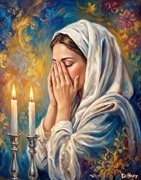
David Hezy is an Israeli Jewish artist whose work captures the warmth, light, and spirituality of Jewish life. Self-taught and working in digital art, David creates deeply personal Jewish art compositions — Shabbat candle lighting, Friday night prayer, Jewish family moments — each one reproduced as a genuine hand-painted oil on canvas by skilled artists. His Jewish paintings bring the beauty of Jewish tradition into homes and collections worldwide, combining emotional depth with rich color and expressive technique. Browse the full collection of David Hezy Jewish art oil paintings below.
Elena Flerova is one of the most celebrated contemporary artists whose vibrant and emotionally resonant works have captivated collectors and art lovers around the world. Born in Russia and deeply rooted in her cultural heritage, Flerova brings an extraordinary fusion of color, symbolism, and storytelling to every canvas. Her paintings are instantly recognizable — alive with golden hues, dancing figures, and a dreamlike quality that transports viewers into a world of timeless tradition and spiritual warmth. Each piece is a visual poem, carefully composed to evoke joy, memory, and a profound sense of belonging.
At the heart of Elena Flerova's work lies a deep celebration of Jewish life, ritual, and community. Her art explores the richness of Shabbat gatherings, festive holidays, and the everyday moments that define a culture built on faith and togetherness. For those who appreciate authentic jewish artwork, Flerova's collection offers an unparalleled window into a world of sacred beauty and cultural pride. Her brushstrokes carry the weight of history while radiating an infectious optimism, making her paintings both deeply meaningful and visually breathtaking for any discerning collector.
The relationship between jews and art has always been one of profound expression and cultural preservation, and Elena Flerova stands as a shining testament to this enduring tradition. Her works are not merely decorations — they are living narratives that honor ancestry, celebrate identity, and invite viewers of all backgrounds to connect with the universal themes of love, family, and spiritual devotion. Whether displayed in a private home or a public gallery, a Flerova painting transforms any space into a sanctuary of warmth and meaning, making her collection an essential and cherished addition to the world of contemporary art.
Adolphe Feder (1886–1943) stands as one of the most compelling and emotionally resonant figures in early twentieth-century European painting. Born in Odessa and later immersed in the vibrant cultural life of Paris, Feder brought to his canvases a rare combination of Post-Impressionist technique and deeply personal narrative. His works pulse with life — crowded market scenes, tender family portraits, and evocative landscapes that capture both the joy and the melancholy of a world on the brink of transformation. Collectors and art lovers who encounter his paintings for the first time are often struck by the sheer warmth and humanity that radiates from every brushstroke.
Feder's artistic legacy is inseparable from the broader story of jewish artwork produced in the first half of the twentieth century. As a member of the École de Paris, he moved among a constellation of Jewish émigré artists — Chagall, Soutine, Modigliani — who collectively reshaped the visual language of modern art. His compositions reflect a world rich in cultural memory, community, and spiritual depth, drawing on both Western painterly traditions and the intimate textures of Eastern European Jewish life. Each work in this collection serves as a window into a civilization that was tragically curtailed, making these paintings not only aesthetically extraordinary but historically invaluable.
The relationship between jews and art has always been one of profound creative dialogue, and Adolphe Feder exemplifies this tradition at its most eloquent. His paintings invite viewers to slow down, to look closely, and to feel the weight of lived experience encoded in color and form. Whether you are a seasoned collector, a museum enthusiast, or simply someone drawn to art that speaks to the soul, this collection offers an unparalleled opportunity to connect with a master whose work deserves far wider recognition. Owning or studying a Feder painting is to participate in the preservation of a vital and irreplaceable artistic heritage.
Artur Markowicz (1872–1934) was a Polish-Jewish painter whose work stands as a luminous testament to a world steeped in tradition, memory, and spiritual devotion. Born in Kraków, Markowicz dedicated much of his artistic life to capturing the intimate rhythms of Jewish community life — the flickering candlelight of the Sabbath, the solemn beauty of prayer, and the tender warmth of domestic ritual. His paintings are not merely images; they are windows into a vanished civilization, rendered with extraordinary sensitivity and a masterful command of light and shadow that recalls the great Dutch masters of the Golden Age.
To engage with Markowicz's collection is to understand the profound relationship between jews and art throughout history — a relationship built on storytelling, sacred memory, and the urgent need to preserve cultural identity against the currents of time. His canvases breathe with authenticity, portraying rabbis lost in study, families gathered around festive tables, and elderly figures whose faces carry the weight of generations. Every brushstroke reflects a deep reverence for the subjects he immortalized, making his body of work an essential chapter in the broader narrative of European Jewish heritage.
For collectors, scholars, and art lovers alike, Markowicz's paintings represent some of the most compelling jewish artwork produced in the early twentieth century — pieces that transcend their historical moment to speak universally about faith, community, and the enduring human spirit. Owning or studying a work by Markowicz is to hold a fragment of living history, a carefully preserved ember of a culture that shaped the soul of Central Europe. His legacy continues to inspire and move audiences around the world, reminding us that art, at its highest calling, is an act of love and remembrance.
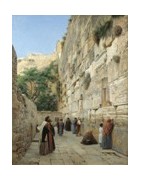
Gustav Bauernfeind (1848–1904) was a German Orientalist painter whose extraordinary works transport viewers into the vibrant, sunlit landscapes of the Middle East and the Holy Land. Trained at the Munich Academy of Fine Arts, Bauernfeind embarked on multiple journeys to Jerusalem, Damascus, and Jaffa, where he meticulously documented the architectural grandeur, bustling street life, and sacred atmospheres of these ancient cities. His paintings are celebrated for their breathtaking photographic precision, luminous color palettes, and an almost meditative attention to detail that captures both the physical beauty and the spiritual weight of the regions he portrayed.
What makes Bauernfeind's collection particularly compelling is the profound cultural intersection it represents. His works stand at the crossroads of European artistic tradition and the rich tapestry of Near Eastern civilization, offering a rare visual dialogue between worlds. Among art historians and collectors, his paintings are recognized as significant contributions to jews and art, as his deeply empathetic portrayals of Jewish communities, synagogues, and sacred sites in Jerusalem reflect a genuine reverence for the culture and people he encountered. His canvases do not merely depict architecture — they breathe life into centuries of history, faith, and human resilience.
Collecting works from the Gustav Bauernfeind category means acquiring pieces of extraordinary historical and aesthetic value. Each painting serves as a window into a world that has been transformed by time, making his art an invaluable record of 19th-century life in the Holy Land. For enthusiasts of jewish artwork, Bauernfeind's oeuvre holds a special place — his sensitive and dignified representations of Jewish sacred spaces and daily life remain among the most evocative and respectful portrayals produced during the Orientalist era. Whether you are a seasoned collector or a passionate admirer of fine art, this collection offers an unparalleled journey through beauty, spirituality, and cultural heritage.
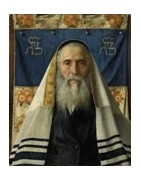
Isidor Kaufmann (1853–1921) stands as one of the most celebrated painters of Jewish life in Eastern Europe, whose luminous works offer an unparalleled window into the world of Ashkenazi Jewry at the turn of the twentieth century. Born in Arad, Hungary, Kaufmann dedicated his artistic career to capturing the intimate rituals, scholarly devotion, and quiet dignity of shtetl communities with extraordinary technical mastery. His portraits of rabbis, students, and pious figures are rendered with a warmth and psychological depth that continue to resonate with collectors and art lovers worldwide. Exploring this collection is an invitation to witness jewish artwork at its most profound — a visual testament to a world of faith, learning, and tradition that has since been largely lost to history.
Kaufmann's technique, shaped by his training at the Vienna Academy of Fine Arts, combined the meticulous realism of the European academic tradition with a deeply personal empathy for his subjects. His use of light is nothing short of masterful — candlelight glowing against the faces of Torah scholars, the soft luminescence of Sabbath candles illuminating domestic scenes — creating an atmosphere that feels simultaneously intimate and transcendent. Each canvas invites the viewer into a sacred space, whether a candlelit study house in Galicia or the modest interior of a Hasidic home in Poland. The relationship between jews and art finds one of its most eloquent expressions in Kaufmann's oeuvre, which bridges ethnographic documentation and fine art portraiture in a way that remains uniquely powerful.
Collecting works by Isidor Kaufmann means acquiring more than beautiful paintings — it means preserving a living memory of a vibrant civilization. His art has been exhibited in major museums across Europe and North America and continues to command significant attention at international auction houses, reflecting both its aesthetic excellence and its irreplaceable cultural value. Whether you are a seasoned collector, a student of Jewish history, or simply someone moved by exceptional figurative painting, this collection offers a rare and deeply rewarding encounter with one of the great masters of late nineteenth-century European art.
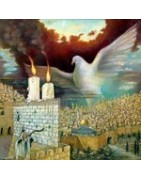
Israel Rubinstein is a celebrated artist whose work stands at the intersection of memory, faith, and visual poetry. His paintings and prints invite viewers into a world where light and tradition merge seamlessly, creating compositions that resonate deeply with those who seek meaning in every brushstroke. Rubinstein's mastery of color and form allows him to capture the essence of Jewish life — from the quiet holiness of the Sabbath to the vibrant energy of festive celebrations — with an authenticity that only a true insider could convey.
Exploring the relationship between jews and art reveals how profoundly culture, history, and spirituality can shape a creative vision. Rubinstein embodies this relationship with extraordinary grace, drawing upon centuries of tradition to produce works that feel simultaneously timeless and urgently contemporary. Each piece in this collection tells a story — of communities gathered in prayer, of ancient landscapes bathed in golden light, of rituals passed down through generations — making his body of work an invaluable cultural treasure for collectors and art lovers alike.
For those who appreciate authentic jewish artwork, the Israel Rubinstein collection offers an unparalleled opportunity to bring home pieces that carry genuine emotional and spiritual weight. Whether you are a seasoned collector or discovering his work for the first time, these paintings speak a universal language of beauty, devotion, and human connection. Each artwork is a testament to Rubinstein's extraordinary gift for transforming the sacred into the visible, making this collection a meaningful addition to any home or gallery space.
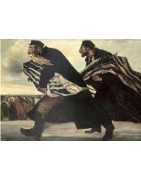
Issachar Ber Ryback stands as one of the most visionary and emotionally resonant figures in the history of modern Jewish art. Born in 1897 in Ukraine, Ryback channeled the vibrant spirit of Eastern European Jewish life into bold, expressionist compositions that pulse with color, movement, and memory. His work draws deeply from the visual vocabulary of shtetl culture — the synagogues, the markets, the faces of ordinary people — transforming everyday scenes into timeless meditations on identity, belonging, and loss. Collectors and scholars alike recognize his paintings as extraordinary examples of jewish artwork that bridges folk tradition with the avant-garde movements of the early twentieth century.
Ryback's artistic journey took him from the streets of his Ukrainian hometown to the cultural epicenters of Berlin and Paris, where he absorbed the influences of Cubism and Expressionism while never losing sight of his deeply rooted heritage. His canvases are alive with geometric abstraction and warm, earthy palettes that evoke both the sacred and the earthly dimensions of Jewish communal life. Each brushstroke carries the weight of a civilization on the brink of transformation, making his body of work not merely decorative but profoundly documentary. The ongoing conversation around jews and art finds in Ryback one of its most eloquent and passionate voices, a painter who insisted that Jewish experience deserved its own visual language and aesthetic dignity.
This collection offers an unparalleled opportunity to engage with Ryback's legacy in its full depth and variety — from intimate studies of village life to grand, symbolic compositions that resonate with spiritual urgency. Whether you are a seasoned collector, a student of art history, or simply someone moved by the power of authentic cultural expression, these works invite you into a world of extraordinary richness. Owning a piece from this collection means participating in the preservation of a cultural memory that is as vital today as it was when Ryback first set brush to canvas, ensuring that his remarkable vision continues to inspire future generations.
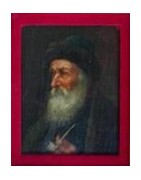
Josef Johann Suss was a remarkable artist whose work stands at a profound intersection of European tradition and Jewish cultural heritage. His paintings and illustrations capture the intimate rhythms of daily life, religious devotion, and community spirit with a warmth and authenticity that continues to resonate deeply with collectors and art lovers alike. Each piece in this collection reflects a meticulous attention to detail, a masterful command of light and shadow, and an emotional depth that transforms ordinary scenes into timeless meditations on identity, faith, and belonging.
Exploring this collection offers a rare window into the world of jewish artwork that honors both the sacred and the everyday. Suss possessed an extraordinary ability to portray synagogue interiors, Shabbat gatherings, and the faces of elders and children with equal reverence and tenderness. His compositions are imbued with a spiritual richness that speaks not only to those familiar with Jewish tradition but to anyone who appreciates the universal language of human dignity and communal memory. The cultural significance of his body of work cannot be overstated, as it preserves visual narratives of communities and customs that have profoundly shaped European and global history.
The relationship between jews and art has always been one of vibrant creativity, resilience, and spiritual expression, and Josef Johann Suss exemplifies this tradition at its finest. Collecting his works means acquiring not only pieces of exceptional aesthetic beauty but also fragments of a living cultural legacy that continues to inspire and educate. Whether you are a seasoned collector, a student of art history, or simply someone drawn to works of profound emotional power, this collection invites you to engage with a singular artistic vision that bridges the historical and the deeply personal in every brushstroke.
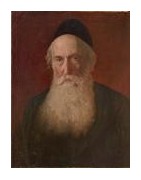
The works of Lazar Krestin stand as a profound testament to the enduring power of human expression, capturing the soul of Eastern European Jewish life with a tenderness and authenticity that few artists have ever achieved. Born in Lithuania in 1868 and later flourishing in the vibrant cultural hubs of Antwerp and Rotterdam, Krestin devoted his life to portraying the intimate world of scholars, merchants, and everyday people whose lives were shaped by faith, tradition, and resilience. His canvases breathe with warmth and psychological depth, inviting viewers into a world that is both deeply personal and universally moving.
As a celebrated figure in the realm of jewish artwork, Krestin mastered a style that seamlessly blended the rich tonal qualities of the Dutch Golden Age with a distinctly modern emotional sensitivity. His portraits of rabbis lost in study, his genre scenes of market life, and his tender depictions of family moments all carry an extraordinary sense of dignity and humanity. The play of light across his subjects — reminiscent of Rembrandt yet entirely his own — creates an atmosphere of quiet reverence that transforms each painting into a meditative experience, a window into a civilization of remarkable spiritual and intellectual richness.
Exploring this collection is an invitation to understand the profound relationship between jews and art across centuries of creativity, devotion, and cultural expression. Krestin's legacy endures not only as a record of a vanished world but as a living celebration of beauty, memory, and the unbreakable human spirit. Whether you are a seasoned collector, an art historian, or simply someone moved by extraordinary painting, the works of Lazar Krestin offer an experience that is both visually magnificent and deeply meaningful, enriching any collection with their historical significance and timeless emotional power.
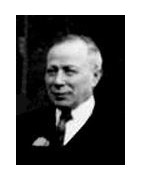
Leopold Pilichowski (1869–1933) was one of the most celebrated and emotionally resonant painters of his era, whose works stand as a profound testament to Jewish life, identity, and tradition at the turn of the twentieth century. Born in Częstochowa and trained across Europe's finest academies, Pilichowski possessed a rare gift for capturing the intimate textures of community — the flicker of candlelight during Shabbat, the fervent devotion of prayer, the quiet dignity of everyday existence. His canvases are not merely paintings; they are living documents of a world that has largely vanished, rendered with extraordinary technical mastery and deep emotional intelligence. Collectors and scholars alike regard his body of work as an essential cornerstone of jewish artwork, offering an irreplaceable window into the spiritual and social fabric of Eastern European Jewish communities.
Pilichowski's most iconic compositions, including his monumental depictions of synagogue interiors and festival gatherings, demonstrate his unparalleled ability to balance grand narrative ambition with intimate human detail. His brushwork carries warmth and tenderness, drawing viewers into scenes of collective memory — men wrapped in tallitot, families gathered around the Seder table, children studying Torah by lamplight. These are images that transcend mere documentation; they pulse with spiritual energy and cultural pride. The relationship between jews and art finds one of its most eloquent expressions in Pilichowski's oeuvre, where faith, identity, and aesthetic vision are woven together into an inseparable whole.
This curated collection brings together a selection of Pilichowski's finest works, including original prints, high-quality reproductions, and archival pieces that allow both seasoned collectors and new admirers to experience his extraordinary legacy. Each piece has been carefully selected to represent the full breadth of his artistic vision — from intimate domestic scenes to sweeping communal portraits. Owning a work by Leopold Pilichowski is to hold a piece of living history, a celebration of cultural resilience and spiritual beauty that continues to move and inspire audiences around the world. We invite you to explore this remarkable collection and discover the timeless power of one of Jewish art's most beloved masters.
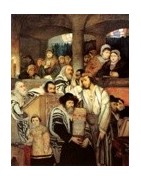
Maurycy Gottlieb (1856–1879) stands as one of the most luminous and poignant figures in the history of Jewish artwork, a prodigy whose brief life produced masterpieces that continue to captivate collectors, scholars, and art lovers worldwide. Born in Drohobych, then part of the Austrian Empire, Gottlieb channeled his extraordinary talent into paintings that explored identity, faith, and the complex relationship between Jewish tradition and the broader European cultural landscape. His works radiate an emotional depth that transcends time, inviting viewers into a world where history, spirituality, and human experience converge with breathtaking intensity.
Among his most celebrated compositions are monumental scenes of Jewish religious life, most notably the iconic Jews Praying in the Synagogue on Yom Kippur (1878), a painting that has become a cornerstone of cultural heritage and a testament to the enduring power of devotion and community. Gottlieb's mastery of light, his sensitivity to expression, and his ability to render the sacred within the everyday make each canvas a deeply moving encounter. His portraits, historical scenes, and introspective self-portraits reveal an artist perpetually negotiating his dual identity — as a Pole, a Jew, and a European — with remarkable grace and intellectual courage.
The broader discourse surrounding jews and art finds in Gottlieb one of its most compelling voices, a painter who dared to assert a proud and complex Jewish identity at a time when such affirmation carried profound social and political weight. Tragically taken by illness at just twenty-three years of age, Gottlieb left behind a legacy that continues to inspire generations of artists and historians. This collection invites you to explore the full richness of his vision — a vision defined by beauty, resilience, and an unwavering commitment to capturing the soul of a people through the transformative power of paint.
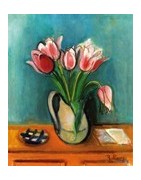
Rudolf Levy (1875–1943) was one of the most compelling and emotionally resonant painters of the early twentieth century, a master whose work bridges the intimacy of Post-Impressionism with a deeply personal vision shaped by his extraordinary life journey. Born in Stettin, Germany, Levy studied under Henri Matisse in Paris and immersed himself in the vibrant artistic circles of Europe, absorbing influences that would transform his palette and his perception of the human experience. His canvases radiate warmth and sensitivity, capturing still lifes, portraits, and Mediterranean landscapes with a luminous quality that feels both timeless and profoundly human.
Levy's legacy is inseparable from the broader story of jewish artwork produced during one of history's most turbulent periods. As a Jewish artist working in an era of rising persecution, his commitment to beauty and creative expression became an act of quiet defiance and enduring courage. His works, many of which survived the chaos of World War II, stand today as testament to the resilience of artistic vision against the forces of oppression. Collectors and art lovers who engage with his paintings are not simply acquiring aesthetic objects — they are connecting with a deeply layered cultural and historical narrative that continues to resonate across generations.
Exploring the relationship between jews and art reveals how profoundly figures like Rudolf Levy contributed to the shaping of modern European painting, often from the margins of societies that sought to exclude them. Levy's body of work invites viewers into a world of color, light, and quiet contemplation, offering a window into a sensibility that was both universally human and distinctly personal. This collection celebrates his remarkable contribution to art history, presenting an opportunity to own a piece of a legacy that is as intellectually rich as it is visually captivating.
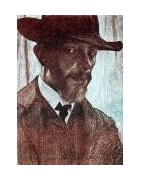
Samuel Hirszenberg (1865–1908) was one of the most powerful and emotionally resonant painters of the late nineteenth and early twentieth centuries, whose works continue to captivate collectors, scholars, and art lovers alike. Born in Łódź, Poland, Hirszenberg studied at some of Europe's most prestigious academies, including those in Kraków, Munich, and Paris, before settling in Jerusalem near the end of his life. His paintings are distinguished by their dramatic use of light and shadow, their deeply empathetic portrayal of human suffering, and their unflinching exploration of Jewish identity and exile. Each canvas tells a story that transcends time, inviting viewers into a world of profound emotional depth and historical significance.
Hirszenberg's body of work stands as a cornerstone of jewish artwork, offering an extraordinary visual record of Jewish life, faith, and resilience during one of history's most turbulent periods. His monumental compositions — such as the haunting Exile and the spiritually charged Spinoza — reflect both personal anguish and collective memory, rendered with a technical mastery that rivals the great European masters of his era. His ability to transform historical and religious themes into universal statements about the human condition makes his paintings not merely historical documents, but timeless works of art that speak across cultural and generational boundaries.
The relationship between jews and art has always been one of profound creativity and cultural expression, and Hirszenberg's legacy exemplifies this tradition at its finest. This collection brings together a curated selection of his most celebrated works, offering an unparalleled opportunity to experience the full range of his artistic vision — from intimate portraits of devout scholars to sweeping allegorical scenes of displacement and hope. Whether you are a seasoned collector or a first-time admirer, the works of Samuel Hirszenberg promise to leave a lasting impression, enriching your understanding of Jewish history, European painting, and the enduring power of art to illuminate the human soul.
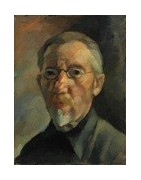
The works of Yehuda Pen represent a cornerstone of Eastern European Jewish artistic heritage, offering collectors and art enthusiasts a rare window into a world that has largely vanished from history. As one of the most influential painters of his era, Pen dedicated his life to capturing the everyday lives, traditions, and spiritual depth of Jewish communities in the Pale of Settlement. His canvases breathe with authenticity — depicting scholars bent over ancient texts, merchants in bustling market squares, and elders whose weathered faces tell stories of generations past. Each brushstroke carries the weight of cultural memory, making his collection an extraordinary treasure for anyone drawn to jewish artwork that speaks directly to the soul.
Pen's unique artistic vision was shaped by his deep roots within the community he portrayed, giving his work an intimacy that few outside observers could ever achieve. He founded the Vitebsk Art School, which became a legendary institution that nurtured some of the twentieth century's greatest talents, including the iconic Marc Chagall. This legacy places Pen at the very heart of the conversation surrounding jews and art, as his influence rippled outward across continents and generations, shaping how Jewish identity and experience would be expressed visually for decades to come. His compositions are rich in symbolism, layered with meaning that rewards careful, contemplative viewing.
Exploring this collection is an invitation to engage with history, faith, and human dignity on the deepest level. Pen's mastery of light and shadow, combined with his empathetic portrayal of his subjects, elevates his work far beyond mere documentation — these are profound meditations on what it means to live, believe, and belong. Whether you are a seasoned collector, a student of art history, or simply someone moved by beauty and cultural significance, the Yehuda Pen collection offers an unparalleled journey into a richly textured world that continues to resonate with timeless emotional and spiritual power.
Stay tuned! More products will be shown here as they are added.