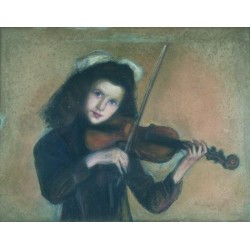
Artur Markowicz
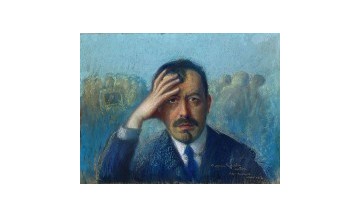
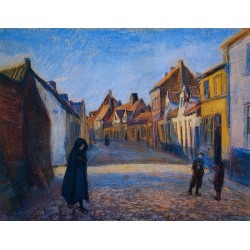
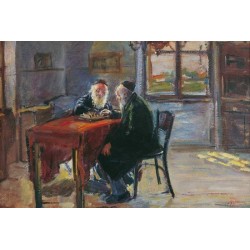
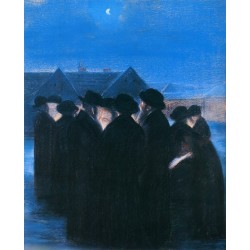
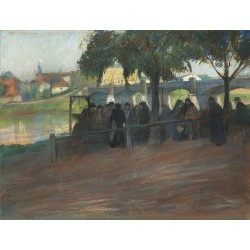
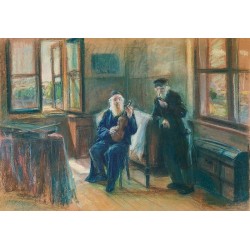
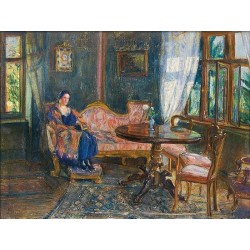
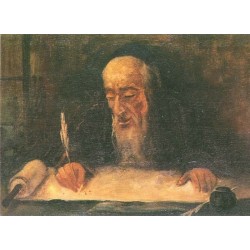
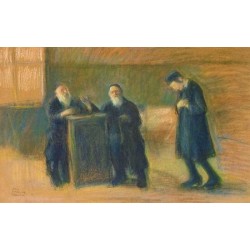
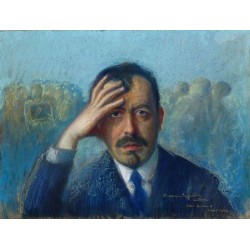
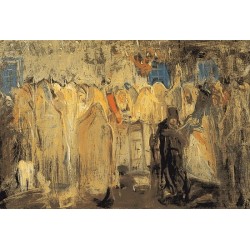
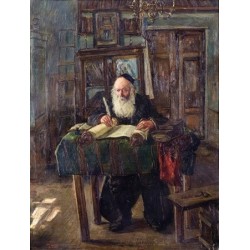
Artur Markowicz (1872–1934) was a Polish-Jewish painter whose work stands as a luminous testament to a world steeped in tradition, memory, and spiritual devotion. Born in Kraków, Markowicz dedicated much of his artistic life to capturing the intimate rhythms of Jewish community life — the flickering candlelight of the Sabbath, the solemn beauty of prayer, and the tender warmth of domestic ritual. His paintings are not merely images; they are windows into a vanished civilization, rendered with extraordinary sensitivity and a masterful command of light and shadow that recalls the great Dutch masters of the Golden Age.
To engage with Markowicz's collection is to understand the profound relationship between jews and art throughout history — a relationship built on storytelling, sacred memory, and the urgent need to preserve cultural identity against the currents of time. His canvases breathe with authenticity, portraying rabbis lost in study, families gathered around festive tables, and elderly figures whose faces carry the weight of generations. Every brushstroke reflects a deep reverence for the subjects he immortalized, making his body of work an essential chapter in the broader narrative of European Jewish heritage.
For collectors, scholars, and art lovers alike, Markowicz's paintings represent some of the most compelling jewish artwork produced in the early twentieth century — pieces that transcend their historical moment to speak universally about faith, community, and the enduring human spirit. Owning or studying a work by Markowicz is to hold a fragment of living history, a carefully preserved ember of a culture that shaped the soul of Central Europe. His legacy continues to inspire and move audiences around the world, reminding us that art, at its highest calling, is an act of love and remembrance.