
- -$127.20


Our Privacy Policy explains our principles when it comes to the collection, processing, and storage of your information. This policy specifically explains how we employ cookies, as well as the options you have to control them.
Cookies are small pieces of data, stored in text files that are stored on your computer or other device when websites are loaded in a browser. They are widely used to "remember" you and your preferences, either for a single visit or for multiple repeat visits
We use cookies for a number of different purposes. Some cookies are necessary for technical reasons; some enable a personalized experience for both visitors and registered users; and some allow the display of advertising from selected third party networks.
Visitors may wish to restrict the use of cookies or completely prevent them from being set. If you disable cookies, please be aware that some of the features of our service may not function correctly
We only collect information about you if we have a reason to do so-for example, to provide our services, to communicate with you, or to make our services better.
We are committed to maintaining the trust and confidence of our website visitors. We do not collect, sell, rent or trade email lists or any data with other companies and businesses. Have a look at our Privacy Policy page to read detail information on when and why we collect your personal information, how we use it, the limited conditions under which we may disclose it to others and how we keep it secure.
We may change Cookies and Privacy policy from time to time. This policy is effective from 24th May 2018.
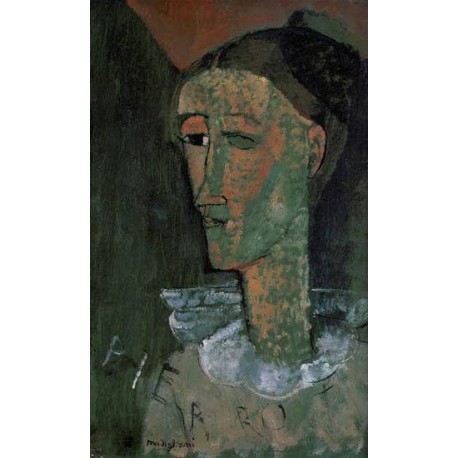
Amedeo Modigliani's Pierrot (Self Portrait as Pierrot) stands as one of the most hauntingly intimate works in early 20th-century art. Painted with Modigliani's signature elongated forms and deeply expressive linework, this masterpiece presents the artist himself cloaked in the costume of the classic commedia dell'arte clown — a figure historically associated with melancholy, longing, and theatrical tragedy. The choice of the Pierrot persona was no accident; Modigliani used this iconic mask to explore themes of identity, vulnerability, and the duality between the public performer and the private soul beneath. The warm, muted tones and the subject's characteristic almond-shaped eyes draw the viewer into a world where sorrow and beauty are inseparable, making this work a profoundly personal confession rendered in paint.
As one of Modigliani's most celebrated oil paintings, Pierrot exemplifies the artist's extraordinary ability to merge Post-Impressionist sensibility with influences drawn from African sculpture and the works of Cézanne. The fluid contours, the subtly tilted head, and the dreamlike quality of the composition reflect a deeply poetic vision that set Modigliani apart from his contemporaries in the vibrant artistic circles of Paris. Today, this self-portrait is treasured not only as a window into the artist's complex psyche but also as a timeless testament to the power of art to transcend personal pain and speak to universal human experience. Collectors and art lovers alike continue to be captivated by its quiet emotional intensity and its enduring aesthetic grace.