
- -$127.20


Our Privacy Policy explains our principles when it comes to the collection, processing, and storage of your information. This policy specifically explains how we employ cookies, as well as the options you have to control them.
Cookies are small pieces of data, stored in text files that are stored on your computer or other device when websites are loaded in a browser. They are widely used to "remember" you and your preferences, either for a single visit or for multiple repeat visits
We use cookies for a number of different purposes. Some cookies are necessary for technical reasons; some enable a personalized experience for both visitors and registered users; and some allow the display of advertising from selected third party networks.
Visitors may wish to restrict the use of cookies or completely prevent them from being set. If you disable cookies, please be aware that some of the features of our service may not function correctly
We only collect information about you if we have a reason to do so-for example, to provide our services, to communicate with you, or to make our services better.
We are committed to maintaining the trust and confidence of our website visitors. We do not collect, sell, rent or trade email lists or any data with other companies and businesses. Have a look at our Privacy Policy page to read detail information on when and why we collect your personal information, how we use it, the limited conditions under which we may disclose it to others and how we keep it secure.
We may change Cookies and Privacy policy from time to time. This policy is effective from 24th May 2018.
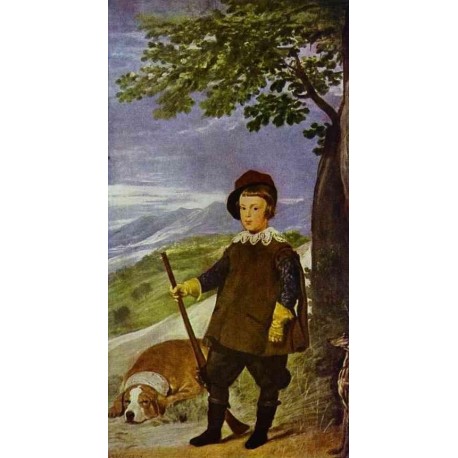
Diego Velázquez's Prince Baltasar Carlos as a Hunter (1636) stands as one of the most captivating and psychologically rich portraits of the Spanish Golden Age. Commissioned for the Torre de la Parada, Philip IV's hunting lodge near Madrid, this masterpiece depicts the young heir to the Spanish throne with remarkable dignity and poise. Dressed in hunting attire — a soft hat, a rich green coat, and leather boots — the five-year-old prince is portrayed with a commanding presence far beyond his years, accompanied by a loyal spaniel and holding a miniature hunting rifle. The sweeping landscape of the Sierra de Guadarrama stretches dramatically behind him, bathed in a silvery atmospheric light that only Velázquez could conjure with such effortless brilliance. The subtle interplay of textures, from the softness of the boy's clothing to the roughness of the terrain, showcases the artist's unrivaled technical mastery.
Among the finest oil paintings ever produced in European art history, this work transcends mere portraiture to become a profound meditation on childhood, power, and dynastic destiny. Velázquez imbues the young prince with an air of melancholy tenderness — a poignant quality, knowing that Baltasar Carlos would die just a decade later at the age of sixteen, leaving the Spanish throne without an heir. The loose, almost impressionistic brushwork that defines the landscape anticipates the techniques of painters centuries later, cementing Velázquez's legacy as a visionary far ahead of his time. Currently housed in the Museo del Prado in Madrid, this extraordinary canvas continues to captivate art lovers and historians alike, offering an intimate window into the grandeur and fragility of the Habsburg dynasty.