
- -$127.20


Our Privacy Policy explains our principles when it comes to the collection, processing, and storage of your information. This policy specifically explains how we employ cookies, as well as the options you have to control them.
Cookies are small pieces of data, stored in text files that are stored on your computer or other device when websites are loaded in a browser. They are widely used to "remember" you and your preferences, either for a single visit or for multiple repeat visits
We use cookies for a number of different purposes. Some cookies are necessary for technical reasons; some enable a personalized experience for both visitors and registered users; and some allow the display of advertising from selected third party networks.
Visitors may wish to restrict the use of cookies or completely prevent them from being set. If you disable cookies, please be aware that some of the features of our service may not function correctly
We only collect information about you if we have a reason to do so-for example, to provide our services, to communicate with you, or to make our services better.
We are committed to maintaining the trust and confidence of our website visitors. We do not collect, sell, rent or trade email lists or any data with other companies and businesses. Have a look at our Privacy Policy page to read detail information on when and why we collect your personal information, how we use it, the limited conditions under which we may disclose it to others and how we keep it secure.
We may change Cookies and Privacy policy from time to time. This policy is effective from 24th May 2018.

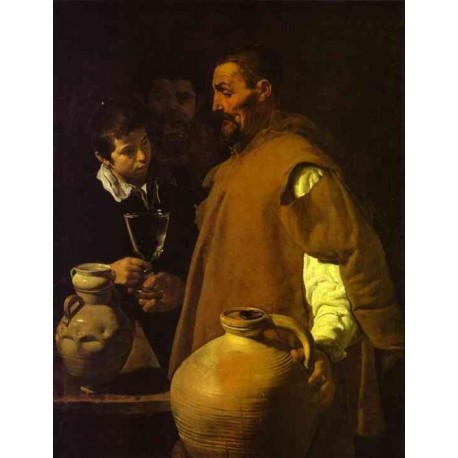
Diego Velázquez's The Waterseller in Seville, painted around 1620, stands as one of the most celebrated early masterpieces in the history of oil paintings, capturing the quiet dignity of everyday life with extraordinary technical brilliance. Created when Velázquez was just a young artist in his early twenties, this iconic work depicts an elderly water seller handing a clay vessel to a young boy, while a third figure drinks in the shadowy background. The composition is a triumph of realism, with Velázquez rendering the textures of the ceramic jugs, the droplets of water clinging to their surfaces, and the worn fabric of the figures' clothing with breathtaking precision and depth.
Beyond its stunning visual impact, The Waterseller in Seville carries profound symbolic and cultural significance, elevating a humble street vendor to the status of a noble and timeless figure. The interplay of light and shadow, characteristic of the Caravaggesque influence that shaped Velázquez's early style, creates a dramatic chiaroscuro effect that gives the scene a near-sculptural quality. Now housed in Apsley House in London, this extraordinary painting invites viewers to contemplate themes of generosity, the passage of time, and the dignity of labor — values that resonate just as powerfully today as they did in 17th-century Seville. It remains an essential work for any admirer of Velázquez's genius and the golden age of Spanish art.