
- -$127.20


Our Privacy Policy explains our principles when it comes to the collection, processing, and storage of your information. This policy specifically explains how we employ cookies, as well as the options you have to control them.
Cookies are small pieces of data, stored in text files that are stored on your computer or other device when websites are loaded in a browser. They are widely used to "remember" you and your preferences, either for a single visit or for multiple repeat visits
We use cookies for a number of different purposes. Some cookies are necessary for technical reasons; some enable a personalized experience for both visitors and registered users; and some allow the display of advertising from selected third party networks.
Visitors may wish to restrict the use of cookies or completely prevent them from being set. If you disable cookies, please be aware that some of the features of our service may not function correctly
We only collect information about you if we have a reason to do so-for example, to provide our services, to communicate with you, or to make our services better.
We are committed to maintaining the trust and confidence of our website visitors. We do not collect, sell, rent or trade email lists or any data with other companies and businesses. Have a look at our Privacy Policy page to read detail information on when and why we collect your personal information, how we use it, the limited conditions under which we may disclose it to others and how we keep it secure.
We may change Cookies and Privacy policy from time to time. This policy is effective from 24th May 2018.
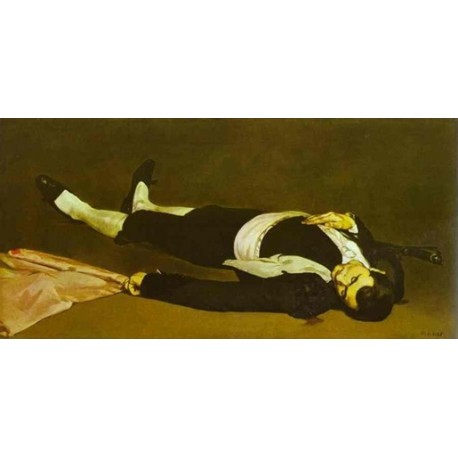
Edouard Manet's The Dead Toreador, painted in 1864, stands as one of the most hauntingly powerful works in the history of Western art. Originally part of a larger composition titled Incident in a Bullfight, Manet made the bold decision to isolate this fallen figure, creating an image of extraordinary stillness and emotional weight. The toreador lies in a dramatically foreshortened pose, his dark costume a stark contrast against the pale, luminous ground beneath him. This masterful use of light and shadow reflects Manet's deep admiration for Spanish masters such as Velázquez and Goya, while simultaneously pushing the boundaries of modern artistic expression. The painting's spare, almost theatrical composition draws the viewer's eye directly to the lifeless figure, evoking a profound meditation on mortality and the fleeting nature of human glory.
Among the finest oil paintings in the collection of the National Gallery of Art in Washington, D.C., The Dead Toreador exemplifies Manet's revolutionary approach to subject matter and technique. The artist's confident, broad brushstrokes and his refusal to romanticize death gave this work a raw, unflinching honesty that shocked and captivated audiences in equal measure. The subtle gradations of tone across the toreador's costume and the delicate rendering of his gloved hands reveal a technical virtuosity that rewards close, careful observation. This painting is not merely a depiction of a fallen warrior — it is a timeless statement on the dignity of the human form, the inevitability of death, and the transformative power of great art. Owning a reproduction of this iconic work is an invitation to bring the elegance and gravitas of Manet's genius into your own space.