
- -$127.20


Our Privacy Policy explains our principles when it comes to the collection, processing, and storage of your information. This policy specifically explains how we employ cookies, as well as the options you have to control them.
Cookies are small pieces of data, stored in text files that are stored on your computer or other device when websites are loaded in a browser. They are widely used to "remember" you and your preferences, either for a single visit or for multiple repeat visits
We use cookies for a number of different purposes. Some cookies are necessary for technical reasons; some enable a personalized experience for both visitors and registered users; and some allow the display of advertising from selected third party networks.
Visitors may wish to restrict the use of cookies or completely prevent them from being set. If you disable cookies, please be aware that some of the features of our service may not function correctly
We only collect information about you if we have a reason to do so-for example, to provide our services, to communicate with you, or to make our services better.
We are committed to maintaining the trust and confidence of our website visitors. We do not collect, sell, rent or trade email lists or any data with other companies and businesses. Have a look at our Privacy Policy page to read detail information on when and why we collect your personal information, how we use it, the limited conditions under which we may disclose it to others and how we keep it secure.
We may change Cookies and Privacy policy from time to time. This policy is effective from 24th May 2018.

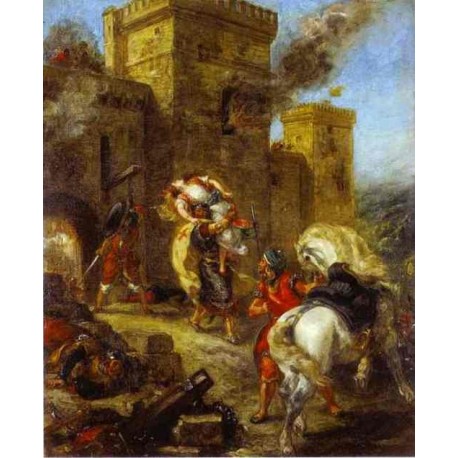
Eugene Delacroix's The Abduction of Rebecca (1858) stands as one of the most electrifying and emotionally charged oil paintings ever produced during the Romantic era. Inspired by Sir Walter Scott's beloved novel Ivanhoe, this masterpiece captures the harrowing moment when the noble Rebecca is seized by the Templar knight Bois-Guilbert during the siege of Torquilstone Castle. Delacroix's signature use of bold, sweeping brushstrokes and an explosive color palette — rich crimson, deep amber, and luminous white — creates an almost cinematic sense of urgency and drama that pulls the viewer directly into the heart of the conflict. The composition's dynamic diagonal lines and turbulent atmosphere are a testament to Delacroix's unrivaled ability to translate raw human emotion into visual form.
What makes this work particularly extraordinary is the way Delacroix balances chaos and beauty with such effortless mastery. Rebecca's flowing garments and dignified resistance against her captors imbue the scene with a profound sense of humanity and moral complexity, elevating it far beyond a simple depiction of conflict. The smoldering castle in the background and the swirling figures of mounted warriors create a layered narrative that rewards careful contemplation. As a defining work within the Eugene Delacroix collection, The Abduction of Rebecca (1858) represents the absolute pinnacle of Romantic painting and remains an essential acquisition for collectors and art enthusiasts who wish to own a piece of art history that is as emotionally resonant today as it was over 160 years ago.