
- -$127.20


Our Privacy Policy explains our principles when it comes to the collection, processing, and storage of your information. This policy specifically explains how we employ cookies, as well as the options you have to control them.
Cookies are small pieces of data, stored in text files that are stored on your computer or other device when websites are loaded in a browser. They are widely used to "remember" you and your preferences, either for a single visit or for multiple repeat visits
We use cookies for a number of different purposes. Some cookies are necessary for technical reasons; some enable a personalized experience for both visitors and registered users; and some allow the display of advertising from selected third party networks.
Visitors may wish to restrict the use of cookies or completely prevent them from being set. If you disable cookies, please be aware that some of the features of our service may not function correctly
We only collect information about you if we have a reason to do so-for example, to provide our services, to communicate with you, or to make our services better.
We are committed to maintaining the trust and confidence of our website visitors. We do not collect, sell, rent or trade email lists or any data with other companies and businesses. Have a look at our Privacy Policy page to read detail information on when and why we collect your personal information, how we use it, the limited conditions under which we may disclose it to others and how we keep it secure.
We may change Cookies and Privacy policy from time to time. This policy is effective from 24th May 2018.
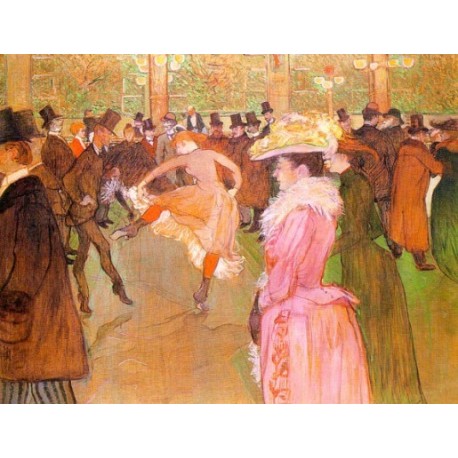
Henri de Toulouse-Lautrec's masterpiece, Training of the New Girls by Valentin at the Moulin Rouge (1890), is a breathtaking window into the vibrant and electrifying world of Parisian nightlife at the turn of the century. This extraordinary work captures a rare behind-the-scenes moment at the legendary Moulin Rouge, where the charismatic dancer Valentin le Désossé — known for his impossibly fluid, boneless movements — instructs a group of young performers in the art of the cancan. Lautrec's signature style is on full display here, with bold, expressive lines and a masterful use of color that transforms a fleeting rehearsal scene into a timeless cultural document. The composition draws the viewer directly into the action, placing them among the crowd of onlookers who encircle the dancers, creating an immersive sense of immediacy that few artists of any era have achieved.
Among the most celebrated oil paintings associated with the Post-Impressionist movement, this work exemplifies Lautrec's unparalleled ability to humanize his subjects while simultaneously celebrating the spectacle that surrounded them. The painting's warm, gaslit palette and dynamic energy reflect the artist's deep personal connection to Montmartre's entertainment world, a world he documented with both affection and unflinching honesty. Toulouse-Lautrec's genius lies in his capacity to elevate the everyday — the stumbling rehearsal, the watchful crowd, the commanding instructor — into something profoundly beautiful and historically significant. Owning a fine reproduction of this iconic work means bringing into your space a piece of art history that continues to captivate audiences, scholars, and collectors more than a century after it was first unveiled.