
- -$127.20


Our Privacy Policy explains our principles when it comes to the collection, processing, and storage of your information. This policy specifically explains how we employ cookies, as well as the options you have to control them.
Cookies are small pieces of data, stored in text files that are stored on your computer or other device when websites are loaded in a browser. They are widely used to "remember" you and your preferences, either for a single visit or for multiple repeat visits
We use cookies for a number of different purposes. Some cookies are necessary for technical reasons; some enable a personalized experience for both visitors and registered users; and some allow the display of advertising from selected third party networks.
Visitors may wish to restrict the use of cookies or completely prevent them from being set. If you disable cookies, please be aware that some of the features of our service may not function correctly
We only collect information about you if we have a reason to do so-for example, to provide our services, to communicate with you, or to make our services better.
We are committed to maintaining the trust and confidence of our website visitors. We do not collect, sell, rent or trade email lists or any data with other companies and businesses. Have a look at our Privacy Policy page to read detail information on when and why we collect your personal information, how we use it, the limited conditions under which we may disclose it to others and how we keep it secure.
We may change Cookies and Privacy policy from time to time. This policy is effective from 24th May 2018.

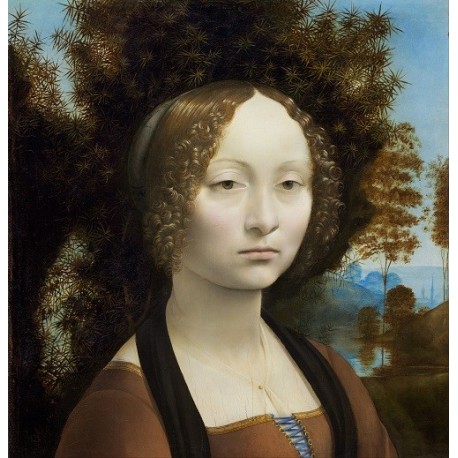
Ginevra de Benci is one of the most extraordinary and celebrated works in the history of Western art, painted by the Renaissance genius Leonardo Da Vinci around 1474–1478. This masterpiece stands as one of the few oil paintings attributed to Leonardo that can be found outside of Europe, now housed in the permanent collection of the National Gallery of Art in Washington, D.C. The portrait depicts Ginevra de' Benci, a young Florentine noblewoman of remarkable intellect and beauty, rendered with Leonardo's unparalleled attention to psychological depth and naturalistic detail. The subject's pale, contemplative face emerges hauntingly from a dark juniper bush — a deliberate visual pun on her name, as "ginepro" means juniper in Italian — while the soft, misty Flemish-inspired landscape in the background showcases Leonardo's pioneering use of sfumato technique.
What makes this portrait truly exceptional is Leonardo Da Vinci's revolutionary approach to capturing the inner life of his subject, moving far beyond the conventional profile portraits of the era to present Ginevra in a three-quarter view that feels strikingly modern and intimate. The delicate interplay of light and shadow across her features, the luminous quality of her skin, and the intricate texture of the surrounding foliage all bear witness to Leonardo's boundless curiosity and technical brilliance. The reverse side of the panel is equally remarkable, adorned with a sprig of juniper encircled by laurel and palm, accompanied by the Latin motto "Virtutem Forma Decorat" — "Beauty Adorns Virtue" — reinforcing the painting's celebration of both physical and intellectual grace. For collectors and art enthusiasts alike, Ginevra de Benci represents the very pinnacle of Leonardo Da Vinci's early genius and the transformative power of Renaissance portraiture.