
- -$127.20


Our Privacy Policy explains our principles when it comes to the collection, processing, and storage of your information. This policy specifically explains how we employ cookies, as well as the options you have to control them.
Cookies are small pieces of data, stored in text files that are stored on your computer or other device when websites are loaded in a browser. They are widely used to "remember" you and your preferences, either for a single visit or for multiple repeat visits
We use cookies for a number of different purposes. Some cookies are necessary for technical reasons; some enable a personalized experience for both visitors and registered users; and some allow the display of advertising from selected third party networks.
Visitors may wish to restrict the use of cookies or completely prevent them from being set. If you disable cookies, please be aware that some of the features of our service may not function correctly
We only collect information about you if we have a reason to do so-for example, to provide our services, to communicate with you, or to make our services better.
We are committed to maintaining the trust and confidence of our website visitors. We do not collect, sell, rent or trade email lists or any data with other companies and businesses. Have a look at our Privacy Policy page to read detail information on when and why we collect your personal information, how we use it, the limited conditions under which we may disclose it to others and how we keep it secure.
We may change Cookies and Privacy policy from time to time. This policy is effective from 24th May 2018.

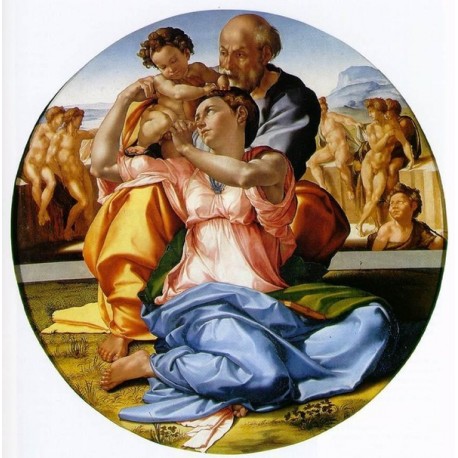
Michelangelo's The Holy Family with the Infant John the Baptist, also known as the Doni Tondo, is one of the most extraordinary and celebrated works in the history of Western art. Painted circa 1506–1508, this masterpiece presents the Virgin Mary, Saint Joseph, and the Christ Child in a dynamic, spiraling composition that radiates both spiritual depth and remarkable human tenderness. Unlike conventional oil paintings of the Renaissance era, Michelangelo chose tempera on panel for this work, achieving an almost luminous intensity of color — from the vivid blues and greens to the warm, golden flesh tones — that continues to astonish viewers centuries after its creation. The circular format, or tondo, was a popular choice for intimate devotional works, yet Michelangelo transformed it into something monumental and architecturally grand, reflecting his unparalleled genius as both a painter and sculptor.
What makes The Holy Family with the Infant John the Baptist so profoundly significant is the way Michelangelo infused every figure with an almost sculptural vitality, as if the forms are about to break free from the painted surface itself. The young Saint John the Baptist observes the sacred family from a respectful distance, adding a narrative dimension that invites contemplation on themes of faith, prophecy, and divine grace. The enigmatic figures in the background, often interpreted as representing the pre-Christian world awaiting salvation, lend the composition a philosophical richness that rewards careful study. Housed in the Uffizi Gallery in Florence within its original ornate frame — itself a work of art — this tondo stands as a testament to Michelangelo's visionary approach to sacred imagery, making it an essential treasure for art lovers, scholars, and collectors seeking to understand the full breadth of Renaissance brilliance.