
- -$127.20


Our Privacy Policy explains our principles when it comes to the collection, processing, and storage of your information. This policy specifically explains how we employ cookies, as well as the options you have to control them.
Cookies are small pieces of data, stored in text files that are stored on your computer or other device when websites are loaded in a browser. They are widely used to "remember" you and your preferences, either for a single visit or for multiple repeat visits
We use cookies for a number of different purposes. Some cookies are necessary for technical reasons; some enable a personalized experience for both visitors and registered users; and some allow the display of advertising from selected third party networks.
Visitors may wish to restrict the use of cookies or completely prevent them from being set. If you disable cookies, please be aware that some of the features of our service may not function correctly
We only collect information about you if we have a reason to do so-for example, to provide our services, to communicate with you, or to make our services better.
We are committed to maintaining the trust and confidence of our website visitors. We do not collect, sell, rent or trade email lists or any data with other companies and businesses. Have a look at our Privacy Policy page to read detail information on when and why we collect your personal information, how we use it, the limited conditions under which we may disclose it to others and how we keep it secure.
We may change Cookies and Privacy policy from time to time. This policy is effective from 24th May 2018.

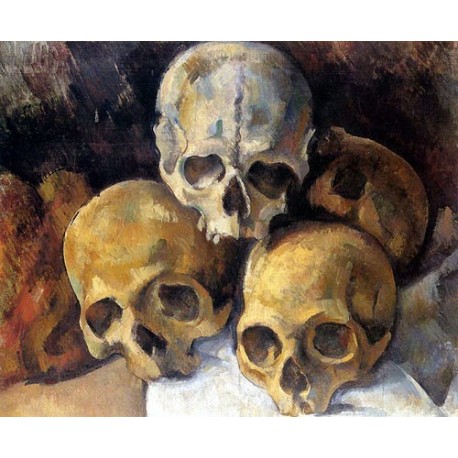
The Pyramid of Skulls by Paul Cézanne is one of the most haunting and philosophically profound works in the artist's extraordinary career. Painted around 1901, this masterpiece presents four human skulls arranged in a pyramidal composition against a dark, muted background, inviting viewers into a deeply meditative contemplation of mortality, time, and the transience of human existence. Cézanne's signature approach to form and structure is brilliantly evident here — each skull is rendered with meticulous geometric precision, showcasing his revolutionary method of breaking down natural forms into their essential shapes. The subdued, earthy palette of ochres, grays, and deep shadows creates an atmosphere of solemn gravitas, while the subtle interplay of light and shadow breathes a quiet, unsettling vitality into these symbols of death.
As one of Cézanne's most compelling oil paintings, Pyramid of Skulls stands at the intersection of the vanitas tradition — a genre long associated with the contemplation of life's impermanence — and the bold, modern vision that would go on to inspire Cubism and the entire trajectory of 20th-century art. Cézanne transforms a classical memento mori subject into something deeply personal and structurally innovative, demonstrating his unparalleled ability to find monumental beauty in the most somber of subjects. For collectors and art enthusiasts alike, owning a reproduction of this iconic work means welcoming into their space a timeless dialogue between life and death, rendered by one of history's greatest artistic minds.