
- -$127.20


Our Privacy Policy explains our principles when it comes to the collection, processing, and storage of your information. This policy specifically explains how we employ cookies, as well as the options you have to control them.
Cookies are small pieces of data, stored in text files that are stored on your computer or other device when websites are loaded in a browser. They are widely used to "remember" you and your preferences, either for a single visit or for multiple repeat visits
We use cookies for a number of different purposes. Some cookies are necessary for technical reasons; some enable a personalized experience for both visitors and registered users; and some allow the display of advertising from selected third party networks.
Visitors may wish to restrict the use of cookies or completely prevent them from being set. If you disable cookies, please be aware that some of the features of our service may not function correctly
We only collect information about you if we have a reason to do so-for example, to provide our services, to communicate with you, or to make our services better.
We are committed to maintaining the trust and confidence of our website visitors. We do not collect, sell, rent or trade email lists or any data with other companies and businesses. Have a look at our Privacy Policy page to read detail information on when and why we collect your personal information, how we use it, the limited conditions under which we may disclose it to others and how we keep it secure.
We may change Cookies and Privacy policy from time to time. This policy is effective from 24th May 2018.
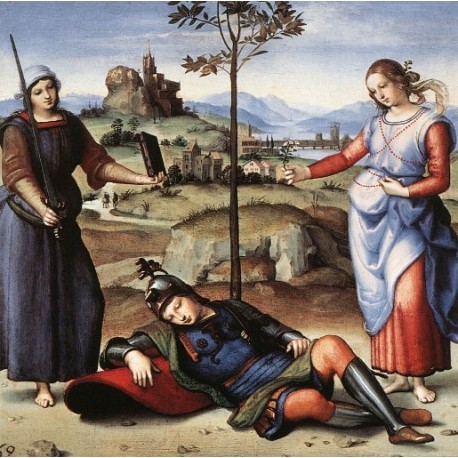
The Allegory by Raphael Sanzio, also known as "The Vision of a Knight," is a captivating masterpiece that showcases the extraordinary genius of one of the Renaissance's most celebrated artists. Created around 1504, this small yet profoundly symbolic work presents a sleeping knight dreaming of a choice between two female figures — one representing Virtue and the other Pleasure — set against a serene, luminous landscape. Raphael's unparalleled ability to convey human emotion, moral philosophy, and divine beauty within a single composition makes this painting a timeless treasure of Western art history. The delicate balance of figures, the soft gradation of light, and the harmonious color palette reflect the artist's mastery that would go on to define an entire era of artistic achievement.
As one of Raphael's early works, the Allegory demonstrates his remarkable technical precision and his deep engagement with humanist ideals that permeated the Italian Renaissance. The painting's rich symbolism — from the laurel branch and book of wisdom to the flower of earthly delight — invites viewers into a contemplative dialogue about virtue, knowledge, and the human condition. For collectors and art enthusiasts seeking oil paintings that embody both intellectual depth and breathtaking visual elegance, this work stands as a supreme example of Raphael's enduring legacy. Housed in the National Gallery in London, the Allegory continues to inspire awe and scholarly admiration, cementing Raphael Sanzio's place among the immortal masters of the Renaissance tradition.