
- -$127.20


Our Privacy Policy explains our principles when it comes to the collection, processing, and storage of your information. This policy specifically explains how we employ cookies, as well as the options you have to control them.
Cookies are small pieces of data, stored in text files that are stored on your computer or other device when websites are loaded in a browser. They are widely used to "remember" you and your preferences, either for a single visit or for multiple repeat visits
We use cookies for a number of different purposes. Some cookies are necessary for technical reasons; some enable a personalized experience for both visitors and registered users; and some allow the display of advertising from selected third party networks.
Visitors may wish to restrict the use of cookies or completely prevent them from being set. If you disable cookies, please be aware that some of the features of our service may not function correctly
We only collect information about you if we have a reason to do so-for example, to provide our services, to communicate with you, or to make our services better.
We are committed to maintaining the trust and confidence of our website visitors. We do not collect, sell, rent or trade email lists or any data with other companies and businesses. Have a look at our Privacy Policy page to read detail information on when and why we collect your personal information, how we use it, the limited conditions under which we may disclose it to others and how we keep it secure.
We may change Cookies and Privacy policy from time to time. This policy is effective from 24th May 2018.

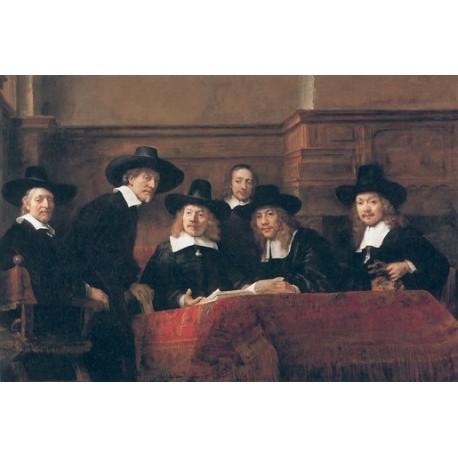
Rembrandt's The Syndics of 1663, also known as De Staalmeesters, stands as one of the most remarkable oil paintings in the history of Western art. Commissioned by the Amsterdam Drapers' Guild, this masterpiece captures six distinguished figures — five syndics and their servant — frozen in a moment of quiet authority and collective purpose. Rembrandt's extraordinary command of light and shadow breathes life into each face, revealing individual personalities with astonishing psychological depth. The warm, golden tones that illuminate the figures against the dark background are a testament to the artist's unparalleled mastery of chiaroscuro, creating a sense of intimacy that makes the viewer feel as though they have just entered the room and interrupted an important meeting.
What makes The Syndics of 1663 truly exceptional is Rembrandt's ability to transform a formal group portrait into a profoundly human narrative. Each syndic gazes outward with a different expression — some alert, some contemplative — giving the composition a dynamic, almost theatrical energy that was revolutionary for its time. The meticulous rendering of the rich Persian tablecloth, the leather-bound ledger, and the fine period clothing reflects Rembrandt's dedication to detail and his deep respect for his subjects. Now housed in the Rijksmuseum in Amsterdam, this iconic work continues to captivate art lovers and scholars worldwide, serving as a timeless celebration of civic duty, dignity, and the enduring power of portraiture at its absolute finest.