
- -$127.20


Our Privacy Policy explains our principles when it comes to the collection, processing, and storage of your information. This policy specifically explains how we employ cookies, as well as the options you have to control them.
Cookies are small pieces of data, stored in text files that are stored on your computer or other device when websites are loaded in a browser. They are widely used to "remember" you and your preferences, either for a single visit or for multiple repeat visits
We use cookies for a number of different purposes. Some cookies are necessary for technical reasons; some enable a personalized experience for both visitors and registered users; and some allow the display of advertising from selected third party networks.
Visitors may wish to restrict the use of cookies or completely prevent them from being set. If you disable cookies, please be aware that some of the features of our service may not function correctly
We only collect information about you if we have a reason to do so-for example, to provide our services, to communicate with you, or to make our services better.
We are committed to maintaining the trust and confidence of our website visitors. We do not collect, sell, rent or trade email lists or any data with other companies and businesses. Have a look at our Privacy Policy page to read detail information on when and why we collect your personal information, how we use it, the limited conditions under which we may disclose it to others and how we keep it secure.
We may change Cookies and Privacy policy from time to time. This policy is effective from 24th May 2018.

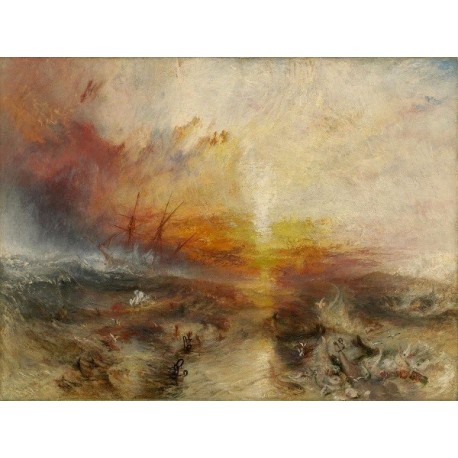
One of the most powerful and emotionally charged works in the history of Western art, The Slave Ship (1840) by J.M.W. Turner stands as a breathtaking testament to the artist's unparalleled mastery of light, colour, and moral vision. Originally titled Slavers Throwing Overboard the Dead and Dying — Typhoon Coming On, this monumental painting depicts a turbulent, fiery sea engulfing the horrific aftermath of a slave ship's captain casting enslaved people overboard to claim insurance money. Turner's genius lies in his ability to transform this harrowing subject into a swirling vortex of crimson, gold, and deep violet hues, where the boundary between sky and ocean dissolves into an apocalyptic symphony of colour. The shimmering, almost supernatural light that radiates across the canvas is a hallmark of Turner's revolutionary approach to oil paintings, elevating raw pigment into pure emotional force.
Housed in the Museum of Fine Arts in Boston, The Slave Ship was famously championed by the critic John Ruskin, who described it as the noblest sea painting ever executed. Beyond its aesthetic magnificence, the work carries a profound humanitarian message, serving as a fierce condemnation of the transatlantic slave trade at a time when abolition was still a fiercely contested cause. Turner's brushwork is loose, expressive, and visionary — the churning waves, the desperate hands reaching above the waterline, and the ominous approaching storm all coalesce into an image of devastating beauty and moral urgency. A reproduction of this iconic masterpiece is a remarkable addition to any collection, bringing into your space not only Turner's extraordinary artistic legacy but also a timeless reminder of art's power to bear witness to humanity's darkest chapters.