
- -$127.20


Our Privacy Policy explains our principles when it comes to the collection, processing, and storage of your information. This policy specifically explains how we employ cookies, as well as the options you have to control them.
Cookies are small pieces of data, stored in text files that are stored on your computer or other device when websites are loaded in a browser. They are widely used to "remember" you and your preferences, either for a single visit or for multiple repeat visits
We use cookies for a number of different purposes. Some cookies are necessary for technical reasons; some enable a personalized experience for both visitors and registered users; and some allow the display of advertising from selected third party networks.
Visitors may wish to restrict the use of cookies or completely prevent them from being set. If you disable cookies, please be aware that some of the features of our service may not function correctly
We only collect information about you if we have a reason to do so-for example, to provide our services, to communicate with you, or to make our services better.
We are committed to maintaining the trust and confidence of our website visitors. We do not collect, sell, rent or trade email lists or any data with other companies and businesses. Have a look at our Privacy Policy page to read detail information on when and why we collect your personal information, how we use it, the limited conditions under which we may disclose it to others and how we keep it secure.
We may change Cookies and Privacy policy from time to time. This policy is effective from 24th May 2018.
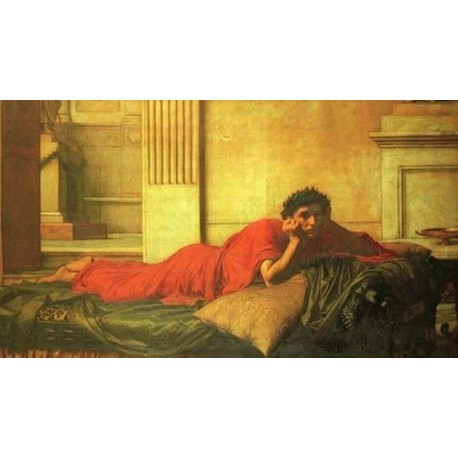
John William Waterhouse's The Remorse of the Emperor Nero after the Murder of his Mother, painted in 1878, stands as one of the most psychologically compelling works of the Victorian era. This monumental composition captures the tormented Roman Emperor Nero in a moment of profound anguish following the assassination of his mother, Agrippina — a crime he himself orchestrated. Waterhouse masterfully employs a rich, dramatic palette of deep crimson, shadowed gold, and cool marble tones to convey the weight of guilt and moral collapse. The emperor's languid, almost theatrical posture speaks volumes about the corruption of power, while the surrounding figures and opulent Roman setting draw the viewer into a world of decadence and despair. As one of Waterhouse's earliest major exhibited works, it reveals the extraordinary technical ambition and narrative depth that would define his legendary career.
Rendered with breathtaking precision among the finest oil paintings of the 19th century, this work showcases Waterhouse's remarkable ability to blend classical subject matter with an intensely human emotional core. The meticulous attention to archaeological detail — from the richly decorated Roman interior to the period-accurate costumes — reflects the artist's dedication to historical authenticity, a hallmark of the Academic tradition in which he was trained. Displayed at the Royal Academy of Arts in 1878, the painting immediately distinguished Waterhouse as a rising master of historical and mythological narrative. Owning a reproduction of this iconic masterpiece means bringing into your space a work that transcends mere decoration, inviting contemplation on themes of power, guilt, and the inescapable consequences of human ambition that remain as relevant today as they were in ancient Rome.