
- -$127.20


Our Privacy Policy explains our principles when it comes to the collection, processing, and storage of your information. This policy specifically explains how we employ cookies, as well as the options you have to control them.
Cookies are small pieces of data, stored in text files that are stored on your computer or other device when websites are loaded in a browser. They are widely used to "remember" you and your preferences, either for a single visit or for multiple repeat visits
We use cookies for a number of different purposes. Some cookies are necessary for technical reasons; some enable a personalized experience for both visitors and registered users; and some allow the display of advertising from selected third party networks.
Visitors may wish to restrict the use of cookies or completely prevent them from being set. If you disable cookies, please be aware that some of the features of our service may not function correctly
We only collect information about you if we have a reason to do so-for example, to provide our services, to communicate with you, or to make our services better.
We are committed to maintaining the trust and confidence of our website visitors. We do not collect, sell, rent or trade email lists or any data with other companies and businesses. Have a look at our Privacy Policy page to read detail information on when and why we collect your personal information, how we use it, the limited conditions under which we may disclose it to others and how we keep it secure.
We may change Cookies and Privacy policy from time to time. This policy is effective from 24th May 2018.

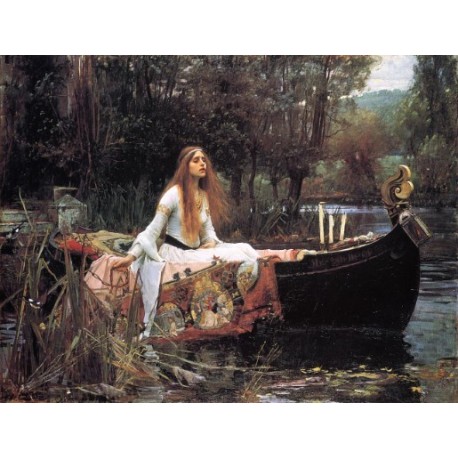
John William Waterhouse's The Lady of Shalott, painted in 1888, stands as one of the most celebrated and emotionally resonant masterpieces of the Pre-Raphaelite movement. Inspired by Alfred Lord Tennyson's haunting poem, this extraordinary work depicts the doomed Lady of Shalott as she leaves her tower and sets adrift on a boat, gazing with sorrowful resolve toward Camelot. Waterhouse captures her with breathtaking intimacy — her white robes cascading around her, three flickering candles at her side, and a tapestry trailing in the cold water — every detail rendered with a poetic intensity that makes this one of the most iconic oil paintings in the history of Western art. The composition radiates a melancholic beauty that is both timeless and deeply moving, drawing the viewer into a world where fate and longing intertwine.
As a defining work in the career of John William Waterhouse, The Lady of Shalott 1888 showcases the artist's extraordinary ability to merge literary narrative with visual splendor. The soft, luminous palette — with its silvery blues, warm ambers, and delicate greens — creates an atmosphere of dreamlike tragedy that feels almost cinematic in its emotional depth. Waterhouse's meticulous attention to detail, from the autumnal willows lining the riverbank to the intricate embroidery of the lady's gown, reflects his mastery of technique and his deep reverence for the Romantic tradition. Housed in the Tate Britain in London, this painting continues to captivate art lovers and scholars alike, its enduring power a testament to Waterhouse's genius and the universal human themes of beauty, isolation, and inevitable loss.